Thursday, June 2, 2016

Unit 10 Reflection


The main theme of Unit 10 was learning about the body and how it functions. Homeostasis is what keeps the body in balance and it uses different organ systems. An essential understanding were the Circulatory, Respiratory, Endocrine, Nervous, and Digestive system. The Circulatory system which includes the brain is the one that passes signals to the peripheral nervous system.
 
The nutrients are the fats and all what the body needs to function and have energy. The nutrients itself start to digest in the mouth and then goes to the stomach and ends in the small intestine. Two types of digestive system, mechanical and chemical. Mechanical is in the mouth and stomach and chemical is in the stomach and the small intestine.

The endocrine system made up of organs that release hormones, a way for your body to communicate with each other. So the endocrine system communicate with the nervous system. A hormone is a chemical messenger that ravels through blood from one organ to another in order to start a production of a protein. 


How is the make up of each organ system different chemically? I wonder how long it
took for all of these organs and organ systems to develop through evolution? I am interested in knowing if we will evolve to eliminate or create new organs. 

My posts got a lot better, from skimming the basics to using pictures and explaining them. I got more comfortable with the form of writing conclusions. I accomplished 40 blog posts which is something that I am proud of. I have my own website to look back on my biology class in my own perspective. I am most proud of my Unit 9 Reflection because it has the most forms of media and is really interesting. I also liked by Bird Beak Lab Conclusion because it was very clear and written well. It uses graphs and a guide to different shaped beaks which I found very helpful. 

Thursday, May 26, 2016

Pig Dissection Relate+Review

The purpose was the physically see the organ systems and how they worked together. We saw what we had learned about in the vodcasts about the systems in the body that maintain homeostasis but instead this was in the body of a pig. My favorite part of the dissection was cutting open the heart because it was the most interesting part. We got to see the actual veins and it was even more clear because of the color dye that had been injected the pig. I think it was a very valuable experience because I got to get a hands-on look inside a an intact once-living animal. It was my first real dissection, and unless I become a doctor, one of the few dissections in my life. It defiantly increased my knowledge of how the inside of my own body looks and I will keep that idea for the rest of my life.

Fuel Zone 20 Time Reflection

I created Fuel-Zone, a nutrition blog for athletes. So far it has 3 posts, all with gif's to make them more interesting. It will include include information of do's and don't's, recipes, and videos in the future for anyone to see and learn. These are some of the topic ideas I made during the project:
I thought my Ted Talk went fairly well. I stumbled a little bit, but I feel like I got my main points across clearly. Slowing it down was hard for me, but even though I have improved from the WEE presentations I should still work on that. If I could do it over, I would have finalized my presentation earlier because I thought I knew what I was going to say but not in any order. It would have been a lot smoother if I had done that because it would have been in my mind longer. On the rubric, I would give myself a 73 because I feel like I was still rushing a little bit and not completely captivating. My preparations seemed rushed so I tried different tactics to practice the speech. One thing I tried was recording myself on my phone and listening to it through out the day. I wouldn't say you could memorize things from this method, but it defiantly helped. Giving the talk, I was very nervous. I was mainly focused on hitting everything on the rubric and I was a little overwhelmed by how many things there were. By the end I loosened up a little and it was easier. It was very helpful to have flashcards and they organized my thoughts. I have grown a lot by finding my comfort zone on presenting and how far in advance I should be practicing. My biggest takeaway from everything was to stop overthinking and do it. The project itself was hard to get the ball rolling and making the speech was a similar situation. If  I know I have to do something, it is best to start it instead of hesitating for other purposes.
 I liked listening to others presentations because I thought it was interesting to see what topics they chose. There were a lot of topics that I wouldn't have guessed people to choose. I am excited to see if they keep working on them and how they turn out. 20 time was a challenge for me, especially since I am a very indecisive person. I learned a lot about myself and I had a positive experience. 

Wednesday, May 11, 2016

20 Time Reflection

I challenged myself by becoming the best blogger and a researcher I could be, meanwhile learning and applying tips about healthy lifestyles. I wanted to extend my skills from biology blog into a real life blog that could actually inform people. I chose this challenge because I play a lot of team sports, and myself and the team all have complained about not eating good food at least once. My goal was to inform high schools athletes about how they can help their bodies when they play any sport or activity. Taking care of your body is very important and the first step to that is education. My main focus was to learn and teach others through a blog. My plan was to create the blog then spread the word about it with my teams or social media. This would create a larger audience and help more people. This project just got started, meaning the foundation of it is sturdy but there are not many posts. It took me a while to come up with a name, make my own logo, and plan out the themes of my future posts. I spent too much time trying to perfect the brand of the blog and ran out of time with the actual blogging, which is the most important part. I learned that I need to set my priorities of projects, like letting go on unimportant parts to accomplish the bigger parts. I was too excited about the many topics my blog would entail and instead should have committed to one to write. If I could do it again, I would write my posts first then start the jazz up the blog site. I would like to continue this project and learn  more nutrition for myself  and also for my team. I would like to have more posts for it to feel more complete. 

Thursday, May 5, 2016

Unit 9 Reflection!

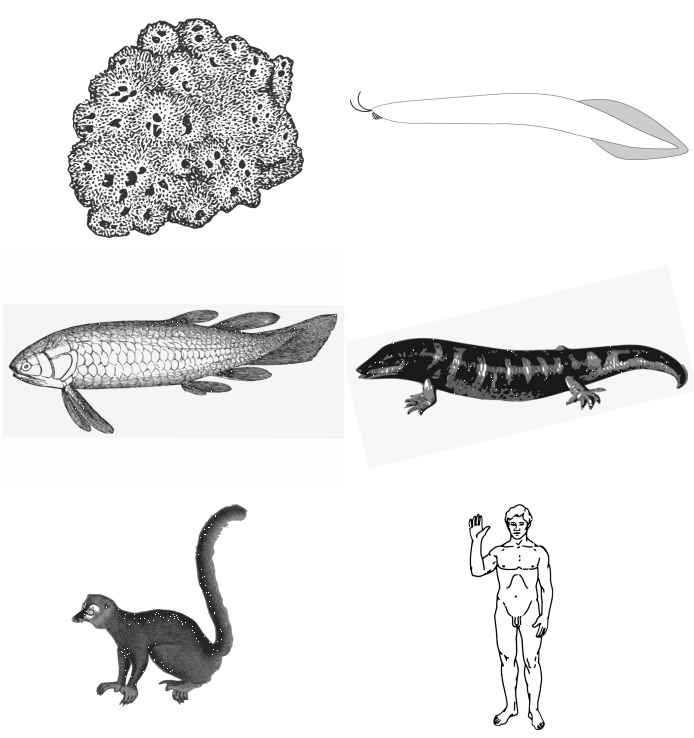
This unit covered what we define as life and how we separate different organisms. Groups are based on similarities to each other. Taxonomic levels divide large groups into smaller and smaller and they still change. The order is kingdom, phylum, class, order, family, genus and species (Kings Play Chess on Fine Grained Sand). Phylogeny shows the evolutionary history of an organism and its common ancestors, basically the roots from which it came from.
 
This GIF really shows how life changed from each species, adding new traits to survive and thrive. Unit 9 could really be summarized by the famous picture with the tree of life, it goes narrow to broad. There are 4 man kingdoms: protista, plants, fungi, and animals.  Bacteria are in the domain prokarya, they are Earth's first organism. They come in 3 shapes: cocci, bacilli, and spirals. They can be classifed by their cell wall that is gram postitive or negative. Viruses are not really living things, but instead a small infectious particle. Fungi are decomposers and come in 3 groups: sac fungi, club fungi and bread molds. Like animals, plants started in water and evolved through natural selcetion, using the same ideas that we learned in evolution labs. Bryophyta are seedless and non vascular, like moss. Pterophyta are seedless vascular plants and have roots. Gymnosperms bear cones and angiosperms have flowers.
 
Animals are diverse but still share characteristics. 97% of species are invertebrates.  Sponges are the most primitive and have no symmetry. There are 4 main classes: scyphozoans(jellies), anthozoans(coral), hydrozoans(hydra), and cubozoans(box jellies). There are 5 groups of arthopods: trilobites, crustaceans, chelicerates, insects, and myrapods.

All vertebrates have similar characteristics, like notochords, hallow nenechords, paryngeal slits, and a tail. Fish are divided into condricthyes and osteoictheyes. Reptiles are diverse group of amniotes who have dry scales, are ectotherms, and a 3 chamber heart. They are divided into turtles and tortoises, snakes and lizards, crocodilian, and tuatara. The class aves are from therapod dinosaurs, and they have hallow bones, fused wishbone, and "hands" with 4th or 5th finger. In the video we watched in class, "Your Inner Fish", we learned about the discoveries in fetus that led to the fused wishbone and middle ear. The last class mammalia have 4 main cahracteristics, hair, mammary glands, middle ear, and strong jaw. They reproduce by either being a monotreme, marsuprial, or eutherian.

I want to learn more about the bacteria and archea domains because the eukarya has so many species and types but the others still seem like a mystery. I wonder about what types of organisms have not been classified yet or even discovered. There are some documentaries about new discoveries that I have heard of and look very interesting.

I thought that my WEE went well and I am proud of the work that I did. I learned a lot of new facts and big words that were very hard to pronounce. My biggest problem was speaking too fast and calming down when speaking to the class. I was nervous because I was really hoping that I would get my information out without staring at my screen and also not to bore the students. Next time, I will do the same way of knowing my presentation very well but I will teach the class in a more conversational way.

Wednesday, May 4, 2016

Your Inner Fish Review

In the "Your Inner Fish"video, we were taught about how fish came onto land and how they eventually evolved more amphibian-like traits, such as hind legs for walking. It  went over how many of our characteristics evolved from them and the physical characteristics which we adapted to own. This series not only taught me about the evolution of man kind but how we fit into the grand idea of earths history.
"What is significant about the master gene EDA?" Master gene EDA is the gene that controls all of our skin organs such as teeth, hair and feathers. It helped to connect all animals as this gene is present in all species and develops some of our most defining characteristics. It connects to our unit about genes since it shows the regulation of genes and traits, but also about how this gene has survived natural selection and evolution to allow us human beings to evolve."Why are mass extinctions important?". Mass extinctions pave the way for new species to rise.


 For example, after the dinosaurs ruled the earth all throughout the Triassic, Jurassic, and 

Cretaceous eras, the mass extinction 65 million years ago wiped them all out, creating a new niche for mammals to cover. This extinction was essential for the continuation of mammals as a species, and eventually our success, since we evolved from the earliest mammals that emerged after the extinction. 

Wednesday, April 20, 2016

20 Time Blogging Progress

I have learned a lot of what to eat before physical activity. It is very helpful for myself while a research it and I hope it can be just as useful for others when I post it. I learned that I am interested in this subject but need to pick a layout for all future posts to the blog. One setback would be not being here for 20 time in class because it is hard to find time to work on it. My next steps are to start posting and creating an educational archive full of different topics. I can help be feeding myself better and advising my team with the best tips.

Friday, April 15, 2016

Haliclystus antarcticus

The phylum of the Haliclystus antarcticus is cnidaria, the order is Stauromedusae and the  family is the Lucernariidae. It is called a stalked jellyfish because it has a stalk-like band of neurons that is divided into four chambers. It has 8 arms that radiate in pairs, giving it radial symmetry. Each of those arms has 200 tentacles that is coated in the stinging cell cnidocyte. It was discovered in Antarctica but there has been reported sightings found in Argentina and Chile. I wonder why the organism can be found in both drastic climates.  

Tuesday, March 29, 2016

The Beginning of Research

Now that I am done with the making of my blog, I will begin to start writing my content and posting it every 2 weeks. I learned a lot more about how to customize blogger to organize things in the way that I want. I learned that it takes me a while to finalize the design because I always see the things that need improving. It is sometimes hard to use blogger because there are few templates and they are not what I had in mind so I've struggled to make them different. My next steps are to research the topics that I have already chosen. I can use this experience for whenever else I need to make a creative blog.

Friday, March 25, 2016

Unit 8 Reflection


This Unit was about evolution and how things affect a population over time. Natural selection is a tool of evolution and it changes the allele frequency of a gene pool. Natural selection favors certain traits and those are passed on to offspring. Darwin said that there are winners and losers and the population starts to look like the winners. 
This was demonstrated in the Bird Beak Lab. Speciation is the rise of 2 or more species from 1 existing species. This can be caused by behavioral isolation, as seen from the Hunger Games Lab when knucklers only wanted to mate with other knucklers, geographic isolation, and temporal isolation. There is a lot of proof of evolution such as vestigial structures, which are the evolutionary leftovers of ancestors and fossils which are a big piece of evidence. Fossils can do relative dating, homologous structures, and analogous structures. The earth is extremely old and amino acids have been found in meteorites giving the idea that RNA monomers have been made spontaneously from molecules. 
I want to learn more about the proof of evolution and other theories because it is like solving the mystery of time and there are many creative theories. How did we gather this information about the different eras and epochs from fossils? I wonder about how much time the earth was empty and what the development of humans looked like. What are the drastic events that led to life on land, plants, and everything else. 

 I was ranked as being assertive, but I need to fix my collaborative skills.  It's much better once everyone gets involved in a project, rather than one person taking control and making everyone do their tasks. It is very important to find a perfect blend of being assertive, but also being a good leader, and making sure everyone feels that their ideas are felt.

Geologic Timeline Reflection

These are the periods of the Earth that seemed most important to me. During the Permian, there were several marine communities and aquatic creatures largely dominated the earth. However, there was a mass extinction at the end of the era that was the largest ever recorded, which was extremely important because it created a niche in which the dinosaurs could rule. If that extinction had never occurred, we might not be here and the world could still be a largely aquatic-ruled planet.  Another important period was the Cambrian, an explosion of life. It gave birth to many new and different species that helped pave the way to the species that we have todayA lot of fossils and other evidences of life can be found from this time, as it was a major turning point when looking at earths history. This period is the first time major groups of animals started to appear with each other, and you could find life in the sea. Another important period is the Creataceous period. In this period, the dinosaurs were still going strong, and then a mass extinction happened. This extinction led to new life, and from previous vodcasts we larned about life growing when a natural event destroys the landscape. It was definitely the most important event throughout the timeline of our Earth's history due to the fact that without it, the world would still be ruled by dinosaurs, and we wouldn't have dominated the food chain and advanced. 

The scale of earth's history is vastly immense, and it took a long time for it to evolve and become what it is today. I found it interesting how we are basically a spec on a scale for the earths lifetime. The earth was not  inhospitable of a place it was until recent years, and especially when we watched a short clip, how short we humans have inhabited the earth. All of our technological, military, and cultural advances seemed to happen over a long time, but in actuality, we appear as a mere speck on the calendar of the earth. However, on our short time on this earth, we have had a major effect,  namely, global warming and pollution. The earth's temperatures have been steadily rising due to our human interactions and if this continues, and we manage to live as long as say the dinosaurs did, then we could experience an earth that is not safe to live on anymore. I would like to know how exactly when the earth was formed and how our planet is so different from others.  Also, I wonder if there are other planets just like ours that have undergone the same process and evolved into a habitat that is capable of sustaining life.
 

Wednesday, March 16, 2016

Week 2: Blog Name Struggle

I have come up with many topic ideas to research after I finish setting up the site. I have learned about my self that I am very indecisive and I am picky about my ideas. The setbacks I have are creative because it is taking me a while to come up with a title and logo for the blog. My next steps are working on  the layout and posting my first post about the goal of the site. I can apply my choice making skills by going with an idea and sticking with it to get stuff done on time.

Tuesday, March 15, 2016

Hunger Games Lab Analysis

1. In this lab, we reenacted evolution that took many many years in a short period of time. It simulated natural selection and how the best of the species survive and pass on their traits.

2. The knucklers were the best phenotype because they only mated with lncukers

3. Yes, the population did evolve. I know this because it started to look more like the "winners" which were the knucklers and pinchers. The A allele frequency dropped from 52% to 30% by the end while the a allele increased from 48% to 70%.
The graph shows that the phenotypes with little a became more prominent than A.

4. The placement of food was random. It affected who was lucky enough to start next to the food because it saves them from working for it. This is similar to a genetic rift but on a smaller scale. The outcome of who died was not random because natural natural selection specifically picks off the weakest and only leaves those who can survive the best.

5. Yes, it would be very different depending on the food. The type of traits that nature selects correspond with the best way for picking up the food in the species's niche. If the food was bigger, the pinchers would have trouble picking it up and not survive while the stumps will do better with big food. In nature, the prey of a species could change also forcing their predators to adapt to them. Say birds with small beaks are the dominant ones because they can get small bugs while the big beaked birds are barely staying alive. If some event causes the bugs to grow rapidly, then the bigger beaked birds could out-eat the small beaked birds because they could hold on to them.

6. Yes, the results would be different if there was not incomplete dominance. If there wasn't, then once the stumpys were wiped out at the beginning there would be an extinction of A alleles and little a would dominate everything 100%.

7. Natural selection favors certain phenotypes and the species evolves to look more like those certain phenotypes.

8. Knucklers only wanted to mate with other knucklers or pinchers. This changed things because no one wanted to mate with the stumpys, making the A allele go away.  This is  a form of sexual selection as seen in nature, like how species only mate with who they think is the best in order for their children to survive.

9. In evolution, the population evolves. Natural selection acts on the phenotype because individuals with the weakest traits in the species do not survive, causing the genotype of the whole species to change.

10. Does disease change phenotype or genotype?


Sunday, March 6, 2016

Bird Beak Lab Conclusion

Part 1

Our claim for the first part of the lab was "individuals with better traits leave more offspring". It was supported by our data because the tweezers and chopsticks picked up the most food and left more offspring by the end. The beaks with tweezers and chopsticks both left 15 chicks and the other beaks leave 2, 3, and 4.


Our second claim was that "populations begin to look more like the winners." This was proven by how the tweezers and chopsticks dominated the resources more than other birds, taking away their chances for reproduction. This was because the tweezers and chopsticks can support their offspring with enough food and the offspring will continue to dominate.

Part 2
  In this lab, we asked the question "if natural selection occurs in a population, how do changes in selective pressures affect the evolution of that species?". We found that as time goes on, species of birds would evolve to look more like the tweezer beak birds and the chopstick beak birds because of their traits that let them pick up the most food and leave the most offspring. Our data showed that the tweezer and chopstick beak birds had the most offspring with 15 chicks each, which was about 21.4% of all the total chicks. The spoon had 14 chicks, the binder clip had 13 chips, and the scissor had 13 chicks. This data supports our claim because natural selection will cause the beaks of birds to evolve and become like the tweezer and chopstick birds so that they can have better traits.

  Even though our hypothesis was supported by our data, there could have been errors about timing and food types.
The first error is that some of the types of beaks could pick up specific types of food better than the rest, making species that go for the same niche more competitive. For example, if a binder clip can pick up macaroni the best and a tweezer could pick up rubber bands the best, and there were more rubber bands than macaroni, the tweezer would probably pick up the most food and leave more offspring. This would cause the population to start looking more like the tweezer bird and the binder clip birds would start to look like the "losers". To fix this, There should be equal amounts of each food.
The second error is the timing not being perfect, which could have caused some people to have more time and others to have less time. For instance, one person could have started picking up food earlier and they could have more time to collect food. This would cause some people to have more or less offspring than they should really have within the time allotted. Timing can be more precise by having individual timers at each table instead of just with Mr. Orre.
This lab was done to demonstrate how natural selection plays a major role in evolution of a certain species. From this lab, I learned that small change can cause a huge change in the appearance of a population. It showed more about the evolution of a species which helps me understand the concept of natural selection showing "winners" and "losers". Based on my experience from this lab I understand why nature is so competitive and how different species change.


Monday, February 29, 2016

20 TIME SERIES: Health Blog Project Goals

What is 20% Time?
20 time is a project in which we get 20% of class time to work on something that we solely choose. 

My essential question is, "what is the best way to eat food?". In terms of intake, I want to answer what, when, why, and how much. 

My project will be a blog informing people, though mainly directed at teenagers, on nutrition and how they can better them selves by the correct foods in their busy lives. I chose this because I play sports and I need the proper fuel to keep me playing at my best. It answers the question by showing what to do and not do since there are many different rumors and studies, I want to condense it into one neat blog.


My goal is to make a blog with different styles of posts, like videos or infographics, that is easy to view. I also want to educate my self with guidelines that will stick with me throughout so I can stay healthy.

I will measure it by how many posts I can make with my research and how many people find it useful. 

My plan moving forward is first, to make the new blog, then start posting every 1-2 weeks. I want to make sure to choose an original layout  for the blog and make it cleat for people to read. Every post will require quite a bit of research so I want to find many sources that have most of the topics I want to learn about. 

Thursday, February 25, 2016

Unit 7 Reflection

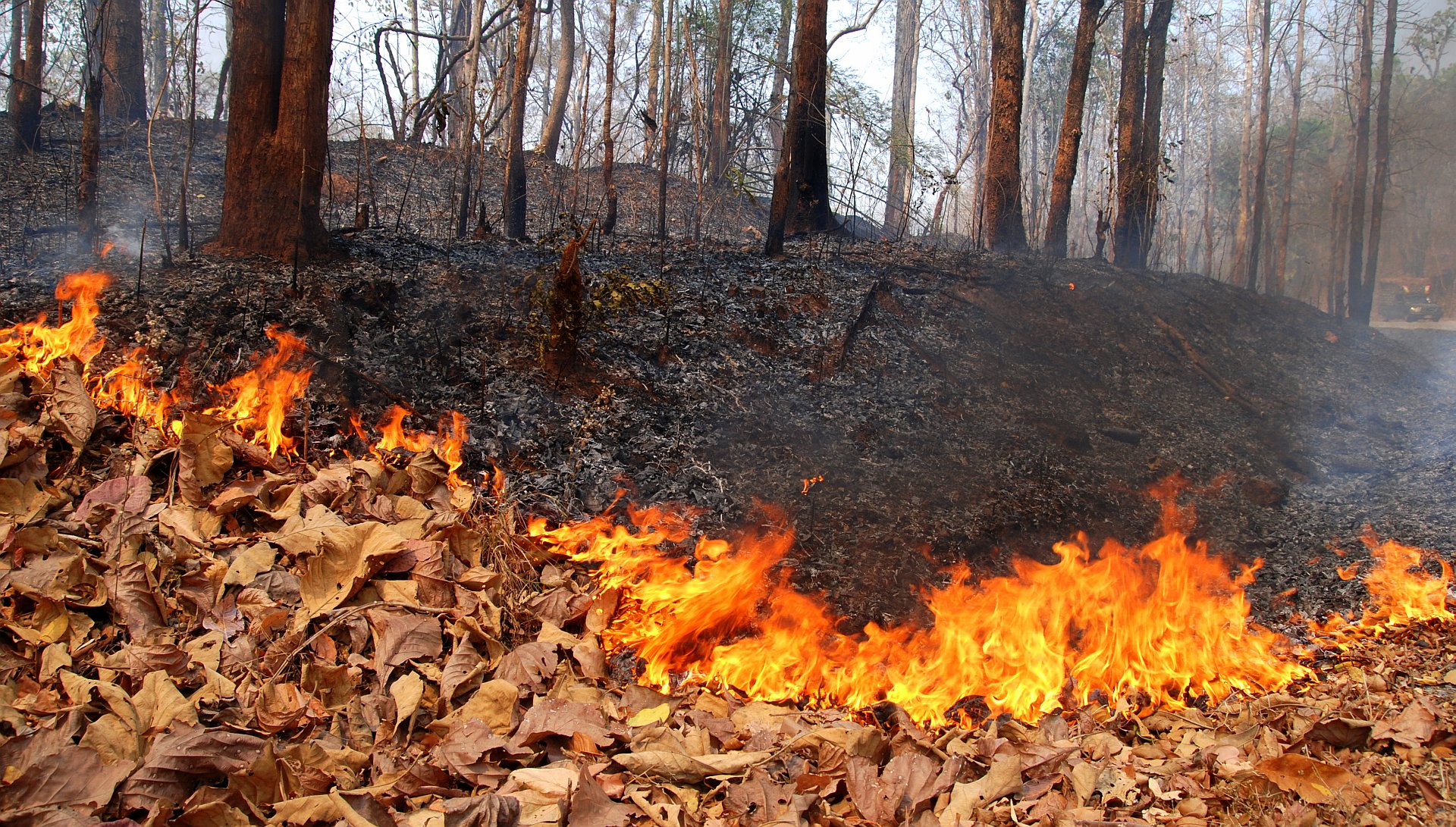
This unit was about the environment and how things affect it. We learned about the populations of animals, like how they rise and fall with disease, natural disturbances, and predators. Ecosystems are very interdependent as we learned with food webs and pyramids. Healthy ecosystems can be seen by how many tertiary or quaternary consumers there are. Since only 10% of energy is passed on to the next level of consumer, larger predators must be given enough energy from the consumers below it. I thought that it was very interesting how the 10% rule worked because it made a lot more sense to me as why there are more secondary consumes versus quaternary consumers. Successions are also very important because they can refresh the resources and restart a population if it was invaded before. Humans stop forest fires when they actually are helping is one of the many things that we interfere with when we shouldn't.
The growth of a population also depends on predators, like the boom bust idea about how they depend on each other greatly because their existence is life or death for the other species. We also viewed the different problems pertaining the environment like overexpolitation, habitat loss, and introduced exotic species. There are things we can do to solve the problem such as identify and protect the hotspot.

I wonder about what projects NASA and the government are working on that they are not telling us. I also want to learn more about the types of companies and industries that are exploited nature so that we stop helping them I have some questions about energy moving around in ecosystems, like whether different ecosystems have different total energy levels that change over time. I want to learn more about the ways we can help everyday and how we can work together.


In the Biologist Conservation project I learned a lot about solutions to global warming and its affects on ice. I did most of my research in Ice911 and I ended up calling the CEO of the company, which was a very exciting experience. She told me more in depth about the company and what she wants to accomplish in the future. I learned about the Antarctic environment and what the native animals eat.
( http://rachelbsciblog.blogspot.com/2016/02/antarctica-threats-video.html )
The dividing of tasks went well but having the group members complete the tasks to the grading requirements was hard. I felt like I had to step in but in the end I am proud of the project. The collaboration could have been better but we had to do most of it during break because we lost a member. I felt I was assertive in the group but I was also too passive in some situations. I would do the work where the other members lacked instead of making them fix their own work. Next time I should communicate with them better and make sure that they know what is expected of them to complete. I can't be covering for everyone the next time and be more assertive in that way.

Antarctica Threats Video

Biologist Conservation video made with Eveliina Niva and Lawtown Fong. 
About the Threats facing the ecosystem and the possible solutions to be carried out in the future.


Tuesday, January 26, 2016

Extra Credit: Gene Therapy


Gene therapy is basically inserting a “good” gene where the one before was defective.
a common risk is when foreign “good” gene is inserted, it affects more cells than it is supposed to and could cause cancer. The gene could also be put in the wrong place or become over-expressed. 

There are 2 forms of gene therapy: somatic and germline.In somatic gene therapy some of the patient's genes may be altered to treat a disease, it doesn’t alter the chance that the disease will be passed on to the patient's children.
In germline gene therapy, genes are modified inside the egg or sperm by injecting DNA fragments. Although it might be able to prevent inherited disease, germline gene therapy is controversial and has not been researched very much due to ethical reasons.


Benefits: There are many benefits to people affected by genetic disorders or diseases today. Whether the diseases is widespread and common or rare and deadly, gene therapy can be the cure to many people's daily problems. An article in the New York Times stated that the developer of an eye treatment, Spark Therapeutics, said the treatment had allowed people with certain inherited retinal dystrophies to more easily maneuver in dimmer light than they could before. The company said it planned to apply to the Food and Drug Administration next year for approval to sell the product. 

Although eye treatments are not the biggest change in the world of biotechnology, gene therapy has the potential to cure other more prominent disorders. Cystic fibrosis is a genetic disorder that makes the mucus in the body thick and sticky, clogging airways. An improved gene therapy experiment worked by curing mice with cystic fibrosis and testing cells from the gut of CF patients. Both in mice with cystic fibrosis and in gut cell cultures, this approach yielded positive results. Professor Zeger Debyser from KU Leuven, Belgium said, "We administered the rAAV to the mice via their airways. Most of the CF mice recovered. In the patient-derived cell cultures, chloride and fluid transport were restored... Developing a treatment based on gene therapy will take years of work. For one thing, our study did not involve actual human beings, only mice and patient-derived cell cultures." 


Risks: The viruses that are used to deliver the good genes can affect more than the cells for which they're intended. If a gene is added to DNA, it could be put in the wrong place, which could potentially cause cancer. Genes also can be over-expressed, meaning they can ramp up the production of so much of a protein that they can be harmful by producing the wrong amount of proteins. 


I believe that the benefits do outweigh the risks because these risks can be fixed over time when more knowledge about DNA sequencing. To cure genetic diseases, scientists must first determine which gene or set of genes causes each disease. The Human Genome Project have completed the initial work of sequencing and mapping, but they are becoming more detailed and accurate. This research will provide new strategies to diagnose, treat, cure, and possibly prevent human diseases with gene therapy with fewer errors. Although the risks are dangerous, the idea that many genetic disorders could be cured and even prevented for generations to come is worth the odds of small mistakes. 


Work Cited: 

-Gene therapy: Promising candidate for cystic fibrosis treatment ( http://www.sciencedaily.com/releases/2015/11/151116084010.htm )

-Eye Treatment Closes In on Being First Gene Therapy Approved in U.S.( http://www.nytimes.com/2015/10/05/science/eye-treatment-closes-in-on-being-first-gene-therapy-approved-in-us.html?_r=0 ) 

Friday, January 22, 2016

Unit 6 Reflection

In Unit 6, we learned about biotechnology and how there were many different uses of it in the world. There is industrial biotech which is like mass production of GMOs, like food or fermented substances. Another biotech field is medical biotech, which is the production medicine and antibiotics. There is diagnostic biotech that is more related to DNA and comparing organisms. And there is Agricultural biotech, which deals with breeding of plants and animals and makes transgeneic organisms.When there are such advances in the field of biotechnonlogy, there will come many questions of morals. Things like cloning and changing genes are debated in the world today. My weaknesses were understanding gel electrophoresis and my strengths were remembering the types of fields in biotechnology. But after the experiment, I grasped the idea of gel electrophoresis a lot better.  
In class, we did a candy gel electrophoresis experiment (http://rachelbsciblog.blogspot.com/2016/01/candy-electrophoresis-lab.html?m=1) and a pGLO lab ( http://rachelbsciblog.blogspot.com/2016/01/pglo-lab.html?m=1) with bacteria. I learned about what the experiments really looked like rather than justbreading about them and how long they take with the different steps. 
I want to learn more about the different bioethical topics because I found it interesting to see what could benefit mankind. With such new technologies being made, there should be a lot of changes in the future. I wonder about what will be made in the next 20 years that will change our lives. 
My New Years goals are coming along pretty well. I have began studying Sunday for the test on Wednesday and prepared the study outline for the week. Also my goal of watching less TV has been working but mainly because I've been so busy that I don't even have time. Hopefully I can keep up this habit for the rest of the semester and read more books. 

pGLO Lab

1.
Plate
Number of Colonies
Color of colonies under room light
Color of colonies under   UV light
- pGLO LB
carpet
beige
beige
- pGLO LB/amp
0
none
none
+ pGLO LB/amp
4
beige
beige
+ pGLO LB/amp/ara
24
beige
green
2. The new transformed bacteria has resistance to antibiotics and has the trait for glowing under UV light.

3. I estimate around 20-30 bacterium were in the 100 mircoliters because the +pGLO LB/AMP has only 4 colonies that were started but +pGLO LB/AMP/ARA ended with 24 colonies.

4. Arabinose turns on the pGLO gene to glow under UV light.

5. GFP can be used to identify certain bacteria to see if it is present or not in a certain solution, it can be used to make animals glow in the dark maybe as an adaptation, and it can show if an inserted gene has been taken in by glowing in the making of GMOs.

6. Genetic engineering has also been used for making pesticide and herbicide resistant plants for farmers to have a greater crop and produce the most food possible.